
Still Frames
Working from photographs

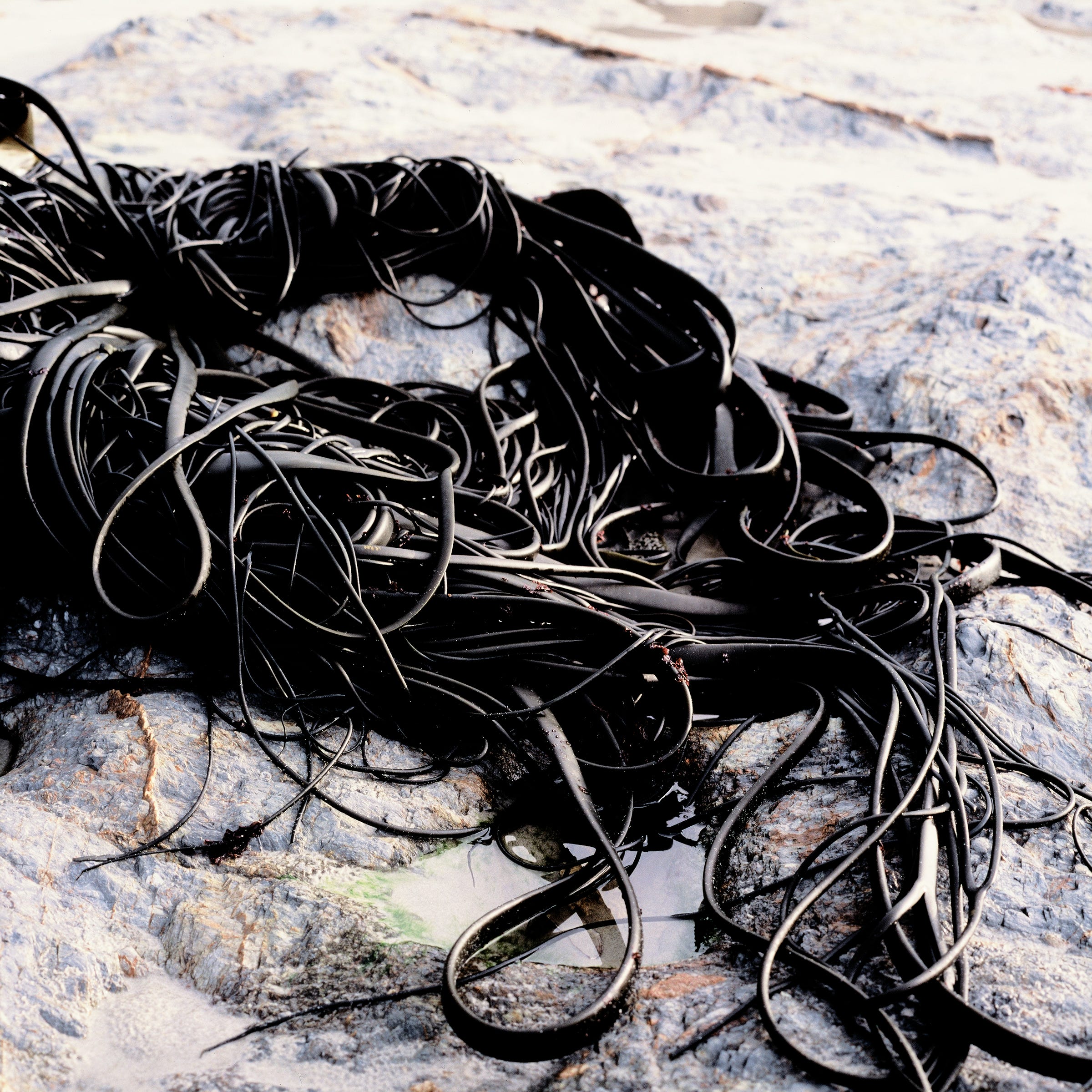
Photographs are useful prompts in themselves. They offer a useful structure for text too — short, candid snapshots of vivid recall that can sit on the page like a series of photographs or break up longer chunks of time and description.
When I work from photographs, I like to tape them to the wall above my desk for a few days or weeks. I like to live with them for a while.
The prompt this week is to select a photograph to put up on the wall for a few days. If you don’t have access to a photograph, choose a memory. Note some basic details on a small piece of paper and attach this to the wall instead. When you’re ready to sit down and write, take the photograph or the note down and spend some time looking at it, bringing the scene to mind. Set a timer for five, ten or twenty minutes — whatever the demands of your life currently allow — and write.
Write who’s there and who isn’t. Write where and when it is and how you can tell. Write what it felt like. Write what you don’t remember. Let the details of the photograph draw you deeper into the sensory experience of the memory or imagine the felt sense of it. See where the photograph or memory takes you.
If you’re writing fiction, write about the photograph but stretch, exaggerate, lie, omit — play.
I taped this photograph of my sister and me to the wall a couple of months ago. It’s from a day I don’t have a specific memory of, in a year that was significant, difficult, murky. I took the photograph down and looked at it closely, set a timer and wrote for thirty minutes by hand.
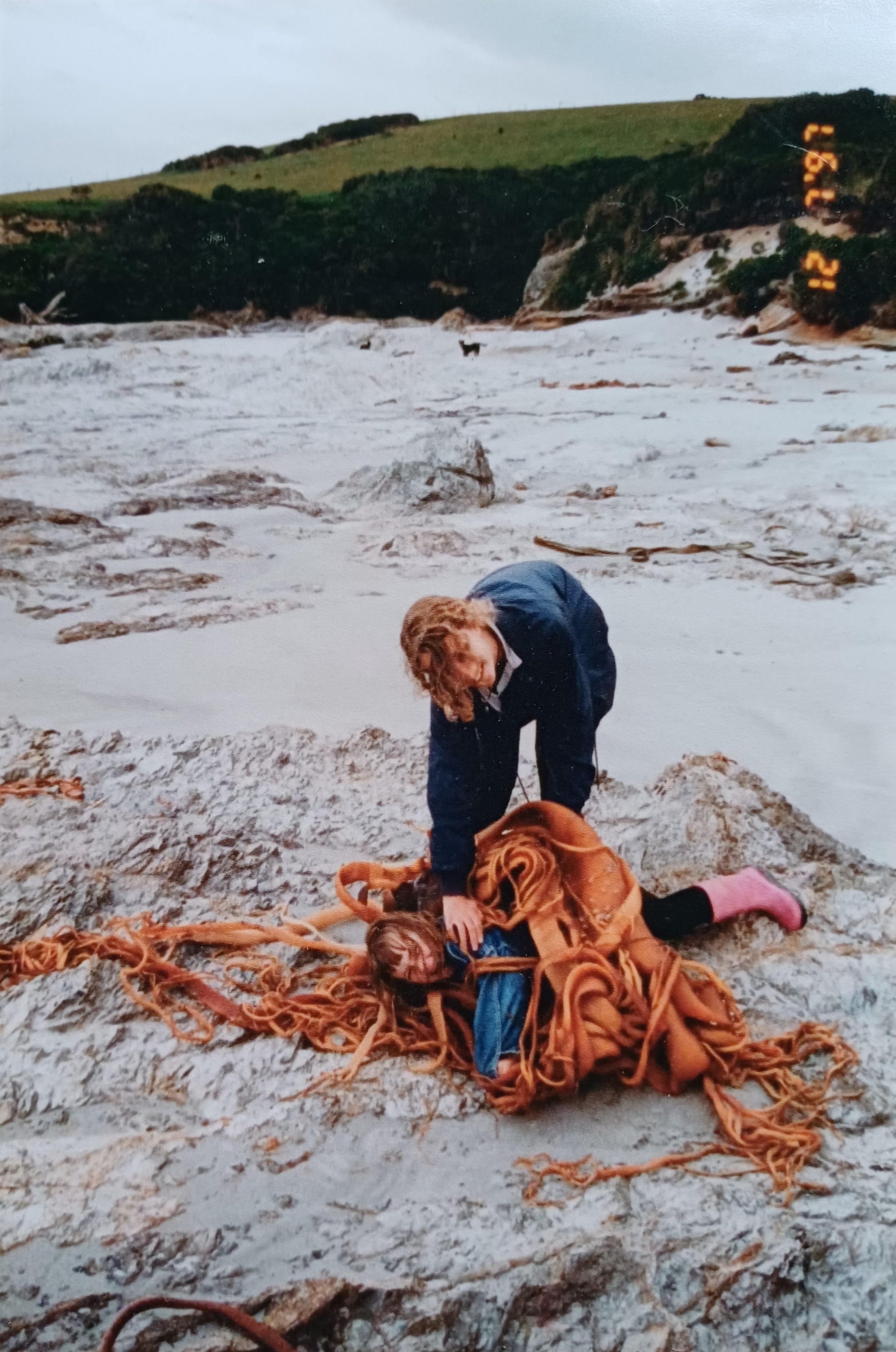
My sister and I are in the foreground of the photograph, on the beach below the farmhouse, with the length of the beach behind us and the paddock ending in a spill of dark gorse and scrub running down to the sea. The sea is out of sight. I’m eleven, my sister is a month from turning six. We’ve been in this new country six months. We don’t really have any friends yet and we aren’t really friends either. In the photograph, we’re both smiling, but I’m holding her down, my hand pressed high up on her back. She’s draped in a loose skein of semi-rotten kelp, orange and soft, maybe dried from the sun, otherwise she’d be covered in decomposing sludge. I’ve probably draped her in it, unless she volunteered, trying to amuse me.
She’s wearing bright pink gumboots and a jean jacket. I’m wearing baggy track pants and a rugby jersey in navy blue, dressed like I’m trying to disappear. I’ve grown out my bangs — my hair’s hanging over my face, the way I like it. My sister’s head is turned sideways, away from the kelp. Her hair is in her face too. Our covered faces mirror each other, our smiles peeking out. We did occasionally bond, when I let her. My sweet, scheming sister, always trying to make us laugh. I did not want to be in that country, this country.
Our dogs are in the background, one nose-down, one alert, keeping us in sight. We did have friends: the dogs and cats — we each had a kitten, a brother and sister — and the lambs we bottle-fed that first winter.
The beach is dull, in various shades of grey, shale and sandstone, wet, crusted-over sand, and driftwood. The rust-orange kelp is the brightest thing in the photo apart from my sister’s pink gumboots and is almost an exact match to the date stamp in the upper right corner that reads 12 7 ‘97.
And here the recollection fails, becomes disoriented, in perfect symmetry with the lived experience of that time, with how our lives broke into before and after. I read the date as 12 July 1997, the way the date is formatted here in Aotearoa, but in 1997, I hadn’t yet trained myself out of the date format native to the US which reads December 7, 1997. Which is it?
The date format was a big deal after we moved and came up in conversation a fair amount, in our family and with people we interacted with. The date had to be recorded correctly on school assignments and cheques and any forms we had to fill out. We did our best to make the switch but there was a period where I couldn’t remember which way was right and which was wrong.
If it’s December 7, 1997, I’m twelve and my sister is six and in one month exactly we’ll have been in New Zealand for one year. That makes it summer, not winter, the bottle-babies weaned and out to pasture. We’re still each grappling with the strange reversal of seasons anyway, July now being winter, December now being summer. The grey sky and flat colour could be any season in Dunedin, summer or winter. Which is it? It maybe isn’t possible to know. My mom might. One of the dogs, way off in the distance, the alert one, could be our black labrador Zeus, who we brought home sometime that year from the local SPCA after one of our two dogs from the US passed away. We’d need other date-stamped photographs, to know for sure. Whether July or December, home to me then is still the country we left, not yet the country we’ve landed in.
My mom’s camera was likely from the US and set to US format, but I can see her dutifully changing the date stamp to match this new country, determined to adjust and adapt, to do what needs to be done, determined to document her girls. Most of the photographs of us are from her point of view. Dad isn’t in this photograph or on the beach — I can count the times I remember him on the beach on one hand. That tracks though, the new country being defined as much by what is present as by what is absent. He and that acreage are so tightly wound now that I can’t be there without thinking of him and I can’t think of him without thinking also of that acreage. I feel his warmth and love in its remoteness.
In 1997, whether July or December, everything feels wrong to me and there is nothing to be done about it, which might explain why my hand is on my sister’s back and why I’m holding her down but also why we’re laughing. Beyond the dislocation of the seasons and the fissure of grief and the goddamned great adventure we’ve been taken on, this dream of my father’s we’ve found ourselves walking around in, with sand and rotten kelp on our hands and boots — beyond all that — a laugh escapes our small bodies, spills from our mouths from under all that hair, and is caught on camera.
This preserved, distant moment asks as many questions as it answers: My dad elsewhere, working, my mom behind the lens, my sister on the ground in a tangle of kelp and me, holding her down.
I typed the piece and worked on it quite a bit before publishing it here. I work slowly when writing about family and about this time in particular. I want to ensure to the best of my sometimes-limited ability that I’m not superimposing my experience over my loved ones’, making unwarranted assumptions, or indulging in blind spots. The writing is always better after making those cuts — what we don’t know is often more interesting than what we think we know.
See you next week.
Loved reading this and related to the emotion around 'acreage'. Looking forward to doing the photo prompt!